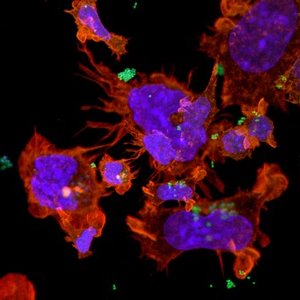
We are interested in understanding immune-mediated diseases and in strategies to monitor and therapeutically influence the balance between immunity and tolerance. We focus at 3 major topics:
Dendritic cells (DCs) activate T lymphocytes (= T cells), which defend our body against infections with microbes. DCs collect antigens in various tissues, migrate to lymph nodes, and activate the T cells there. T cells then enter various tissues to combat microbes. DCs can also present autoantigens, but this normally leads to immune tolerance by elimination of potentially harmful T cells, or by induction of regulatory T cells that suppress harmful T cells. If such peripheral immune tolerance fails autoimmune diseases result, such as type I diabetes mellitus, multiple sclerosis, rheumatoid arthritis or glomerulonephritis. We apply various techniques like in vivo models for these diseases, cell-specific knockouts, genetic in vivo knockdown, metabolomic analysis, single cell sequencing and multicolor flow-cytometry and histology to understand the immunopathophysiology.
Here are some of our previous and current research projects:
One of our research foci is the urogenital tract as a target of autoimmunity (Kurts et al, Nat Rev Immunol, 2013 and an update in 2025). We described DCs in the kidney (Krüger et al, JASN 2004, Kurts et al, Nat Rev Nephrol 2020) and their role in glomerulonephritis by presenting glomerular antigen to Th cells (Heymann et al, J Clin Invest 2009, Yin et al, Kidney Int 2023). In the context of the SFB1192, we found that kidney DCs especially depend on the receptor CX3CR1 (Hochheiser et al, J Clin Invest, 2013), identifying a molecular target of glomerulonephritis therapy. We have recently developed a new analytic pipeline for determing individual glomerular proteinuria that uses tissue clearing and light sheet microscopy (Böhner et al, 2024).
Kidney DCs also activate the inflammasome in response to crystals that precipitate in diseases like primary or secondary hyperoxaluria, leading to irreversible kidney fibrosis (Ludwig-Portugall, Kidney Int 2016). We showed that inflammasome inhibitors can attenuate these diseases, identifying a new therapeutic principle in crystal nephropathy (funded by the SFBTR57, co-speaker C. Kurts). We identified renal ILC3 as mechanistic link between inflammasome activation and kidney fibrosis (Frasconi et al, J Immunol, 2024).
Finally, we collaborate with J.E. Turner on the role of MAIT cells in glomerulonephritis (Gnirck et al, Nat Comms 2023) and with Z. Abdullah in studying the mechanism of immune-complex glomerulonephritis during chronic viral infections and with N. Garbi in understanding the immune mechanisms in ANCA vasculitis in the context of the SFB237.
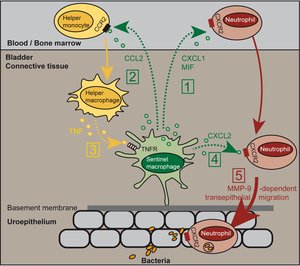
We have generated novel tools to study kidney diseases and DCs (Tittel et al, Nat Methods 2012). We showed that kidney DCs sense invading bacteria in bacterial kidney infection and in response recruit immune effector cells to clear the bacteria (Tittel et al, JASN 2011). We identified a novel immune function of macrophages that use the cytokine TNF to regulate the immune response of neutrophilic granulocytes in bacterial infection (Schiwon et al, Cell, 2014).
Recently, we showed that consuming a high salt diet for only one week weakens the immune system, so that bacterial infections proceed more severely (Jobin et al, Science Transl Med, 2020). This because a high salt diet induces endocrine perturbations that suppress neutrophilic granulocytes, which defend us against bacterial infections.
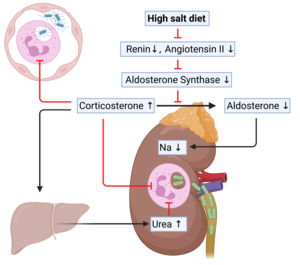
We currently investigate the underlying cell biology in the context of the SFB1454. For a more comprehensive discussion on how salt affects our immune system see our review Jobin et al, Trends Immunol 2021.
The mechanism of cross-presentation enables DCs to activate CD8+ T cells (Kurts et al, Nat Rev Immunol, 2010), which are crucial for the immune defense against viruses, intracellular bacteria and tumors and in vaccination. We identified a new cell biological mechanism of cross-presentation, where antigen is taken up by distinct receptors, into a distinct endosomes presentation (Burgdorf et al, Science 2007), where they are loaded onto MHC I molecules and this process is regulated by TLR/MyD88-signaling (Burgdorf et al, Nat Immunol, 2008).
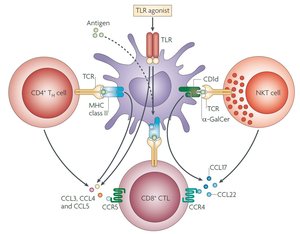
Cross presentation requires that CD4+ Th cells provide a second opinion as to whether an antigen presented by the DC warrants CD8+ T cell activation (= classical cross priming). We have shown that also NKT cells can provide this second opinion (= alternative cross priming). While Th cells induced production of CCR5-binding chemokines, NKT cells caused DCs to produce CCR4-binding chemokines. Both chemokines synergistically enhance cross presentation (Semmling et al, Nat Immunol, 2010). It has been proposed to term these chemokines „Signal 0“, in extension of the classical “Signal 1&2” hypothesis by Bretscher und Cohn. Signal 0 chemokines allow CD8+ T cells to more efficiently locate DCs that present relevant antigen. We currently study whether NKT cells also affect other cellular functions of CD8 T cells (Heuser et al, J Immunol 2024) such as their metabolism.
Regulatory T cells (Treg) can control autoreactive T cells. We showed that survival of these cells depends on the NFkB component IKK2. Short-term IKK2 inhibition attenuated glomerulonephritis by preventing DC activation, but long-term inhibition depleted Treg, and aggravated glomerulonephritis (Gotot et al, JASN 2015). This effect can be used to stimulate tumor immunity (Heuser et al, Cell Reports 2017).
We furthermore collaborate with J. Becker-Gotot to study the ability of Treg to prevent autoantibody formation cells via PDL-1 that deletes autoreactive B cells. (Gotot et al, PNAS 2012). This mechanism is important for preventing the formation of inhibitory antibodies against coagulation factor VIII in hemophilia patients (Gotot et al, JCI 2022).
In collaboration with several groups in China, we investigate immune mechanisms in patient cohorts with various types of Cancer and Covid 19 (Mei et al, J Immunoth Cancer 2021; Hua et al, Ann Oncol 2023). We have developed novel bioinformatic approaches that allow deciphering the regulation of pathogenic T cell responses in various tissues and disease situations.
Tel.: +49 228 287 - 11050
Fax: +49 228 287 - 11052
ckurts(at)uni-bonn.de

| 1985 - 91 | Studies in physics and medicine, University of Göttingen |
| 24/10/1991 | State examination in medicine, University of Göttingen, graded "very good (1,5)" |
| 14/11/1991 | doctoral thesis, Dept. of Immunology, University of Göttingen, Prof. O. Götze, "Elevated alternative pathway of complement turnover in chronic renal failure"; graded "summa cum laude" (excellent) |
| 11/91-4/95 | Medical Officer and Research Fellow, Department of Nephrology (Prof. KM Koch) Medical School of Hannover, Germany; training in general internal medicine |
| 4/95-3/98 | DFG-funded Postdoctoral Research Fellow, Thymus Biology Unit (Prof. JF Miller), Walter and Eliza Hall Institute for Medical Research (WEHI), Melbourne, Australia |
| 4/98-8/00 | Medical Officer and Research Fellow, Dept. of Nephrology, Hannover |
| 06/09/2000 | Board certification for Internal Medicine (Facharzt für Innere Medizin) |
| 9/00-3/03 | Assistant Prof. at Dept. of Nephrology and Immunology (Prof. J. Floege), RWTH Aachen, Germany, as DFG Heisenberg fellow and Senior Physician |
| 9/02-12/02 | Sabbatical, La Jolla Institute for Allergy and Immunology, San Diego USA |
| 13/03/2003 | Tenured Professor of Molecular Immunoloy, University of Bonn, Germany |
| 27/10/2005 | Board certification for Nephrology (Innere Medizin Teilgebiet Nephrologie) |
| 4/2009 - now | Director Institute of Molecular Medicine & Experimental Immunology, Medical Faculty, University of Bonn, Germany |
| 3/2005-now | Student Tutor (Vertrauensdozent of the Studienstiftung des Deutschen Volkes (German National Academic Foundation) |
| 4/2010-10/17 | Selection committee member for Fritz-und-Ursula-Melchers Award of the DGfl |
| 06/12-10/18 | Applicant and Board member DFG Excellence Cluster "ImmunoSensation", Bonn |
| 07/12-03/21 | Co-speaker SFB TR57 "Organ-Fibrosis" (Aachen Bonn), organizing the Bonn site |
| 2013-2016 | Selection committee for the Friedrich Hirzebruch Prize of the Studienstiftung des Deutschen Volkes for exceptional theses in Mathematics, Science and Engineering |
| 2013-2019 | Co-speaker SFB 704 "Molecular Mechanisms and Chemical Modulation of Local Immune Regulation", representing the Medical faculty projects |
| 09/2014 | President Annual Conference of the German Society of Immunology, Bonn |
| 1/2014-1/16 | Member of the animal ethics committee of the German state of Northrine-Westfalia |
| 2014-2020 | Selection committee member for the Heinz Maier-Leibniz Award of the DFG |
| 11/2015-25 | Speaker international graduate school GRK 2168 Bo&MeRanG (Bonn & Melbourne Reserach and Graduate training Group), Topic "Myeloid antigen presenting cells and the induction of adaptive immunity" |
| 2016-2018 | Elected member of the Senate of the University of Bonn |
| 2016-2020 | Elected member DFG Fachkollegium (Review Board) Medicine, Inflammation |
| 04/2018-now | Elected member of the Medical Faculty Council Bonn (re-elected 2020, 22 and 24) |
| 11/2018-now | Board member Excellence Cluster "ImmunoSensation2", re-elected 2023 |
| 02/2020-now | Deputy Senator Leopoldina Section 13 - Microbiology/Immunology, re-elected 2024 |
| 03/2021-now | Selection committee member for the Paul Ehrlich- und Ludwig Darmstaedter-Prize for Junior Scientists of the Paul Ehrlich-Foundation |
| 07/2023-now | Speaker Bonn Cumming Global Centre for Pandemic Therapeutics |
| 10/2023-now | Leading student tutor (federführender Vertrauensdozent) of the Studienstiftung des Deutschen Volkes (German National Academic Foundation) for Bonn |
| 1986-91 | Fellowship Studienstiftung des deutschen Volkes |
| 30/09/1992 | Annual award of the German Society of Nephrology for best doctoral thesis |
| 10/12/1999 | Sir Hans Krebs award for basic medical research |
| 20/06/2000 | Heisenberg-Fellowship of the Deutsche Forschungsgemeinschaft (DFG) |
| 10/00-2/05 | Career development grant of the German state of Northrine-Westfalia |
| 27.06.2010 | Hans-U.-Zollinger-Award of the German Society for Nephrology |
| 28.03.2012 | Gottfried-Wilhelm-Leibniz-Prize of the DFG |
| 06/2014 | Elected member German National Academy of Sciences Leopoldina |
| 09/2019 | Honorary Professorship University of Melbourne, Australia |